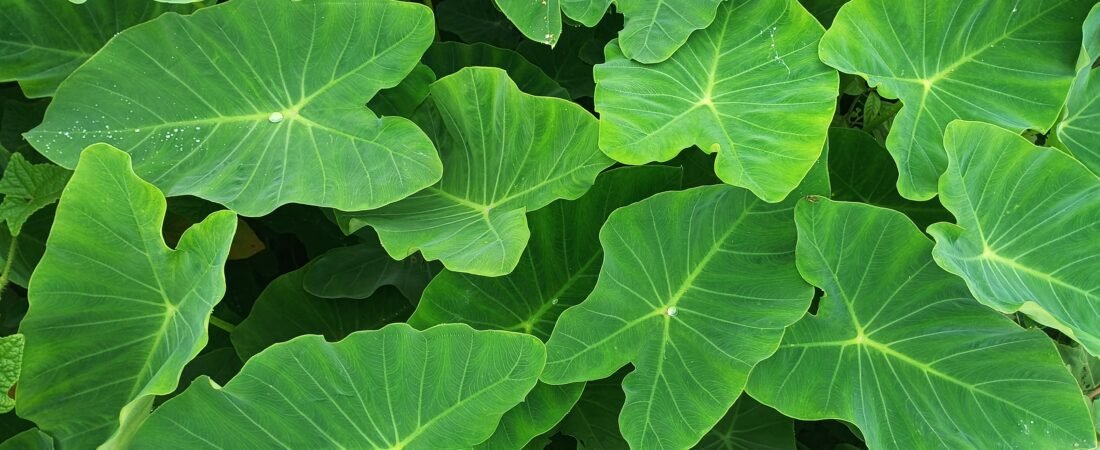
Spinach and broccoli often dominate conversations about nutritious vegetables. But in Ghanaian kitchens, another leafy green has been providing nourishment for generations: kontomire.
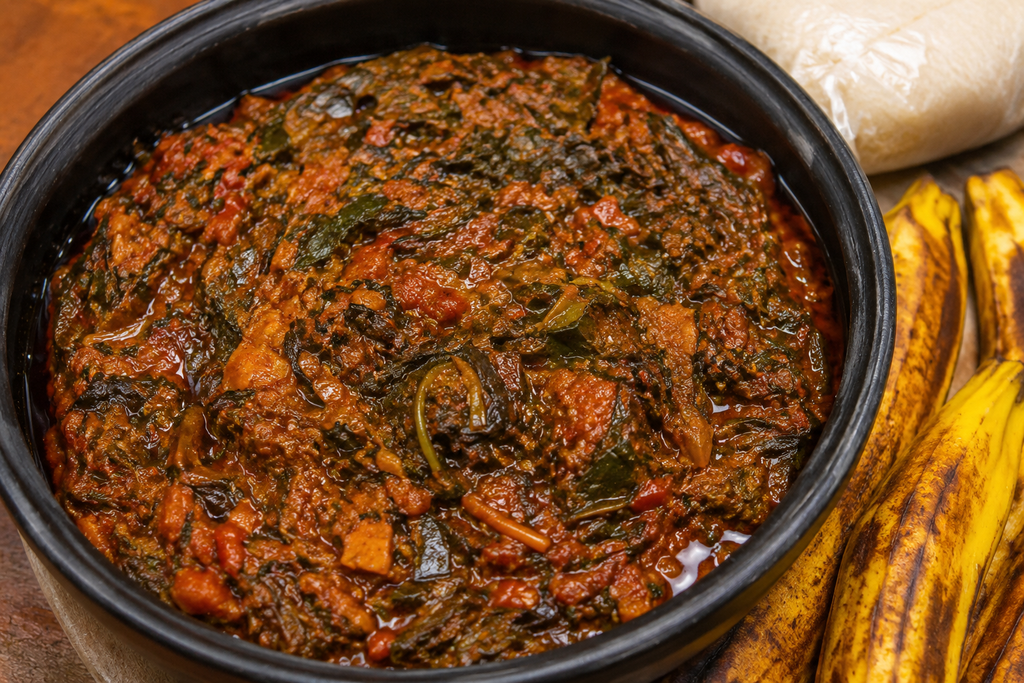
Kontomire is as versatile as it is nutritious. If you’d like to experience this Ghanaian staple for yourself, try our Recipe for a simple plant-based kontomire stew.
A recent discussion during Joy Sustainability Month brought renewed attention to the nutritional value of kontomire, with dietician Emelia Dery Gbogr, Principal Nutrition Officer at the University of Ghana Medical Centre, highlighting its nutrient density.
According to the dietician, kontomire can provide higher levels of some nutrients than commonly consumed vegetables such as spinach and broccoli, including protein and fibre, while also being particularly rich in vitamin A.
A Local Food With Global Potential
Kontomire, commonly referring to cocoyam leaves, is widely used in Ghanaian cuisine and features in dishes such as kontomire stew and abomu.
Beyond its cultural importance, indigenous leafy vegetables such as kontomire can contribute valuable protein, vitamins, minerals and other nutrients to the diet.
Ghana’s Food-Based Dietary Guidelines also recognise kontomire as an important vegetable and encourage people to eat a variety of vegetables regularly.
Why Local Matters
The conversation about kontomire isn’t only about nutrition.
It is also about accessibility, affordability and food sovereignty.
Kontomire is locally grown and widely available in Ghana. It can be cultivated by farmers and, in some cases, even grown around the home.
At a time when African countries are looking for ways to strengthen food security and build more resilient food systems, foods that are already growing locally deserve greater attention.
Africa’s Forgotten Food Champions
The global conversation around healthy and plant-based eating often focuses on foods that have gained popularity outside the continent.
But Africa has its own nutritional powerhouses.
Kontomire, moringa, amaranth, cowpea leaves and other indigenous vegetables have long been part of African food traditions.
The answer isn’t necessarily to declare one vegetable better than all others. A healthy food system benefits from diversity.
Perhaps the bigger lesson is this:
We don’t always need to look outside Africa for nutritious foods. Some of our most valuable foods have been growing here all along.
And as Africa considers the future of its food systems, perhaps it is time to give them the attention they deserve.
VAN | Reporting Africa. Inspiring Change.
Leave a Reply